In the millennia architecture has a been a symbol of power. During their lifetime, sovereigns and aristocrats lived in mgnificent palaces and royal residences. For the afterlife, they desired equally prestigious residences and built grandiose monumental tombs.
This occurred in the Egyptian, Oriental, and Hellenistic worlds, as well as in the Etruscan, Italic, and later Roman worlds.
Since the Republican era, Rome's aristocratic families competed to build imposing and monumental tombs along the consular roads, to have maximum visibility: they were a symbol of the power and prestige of their gens, their family.
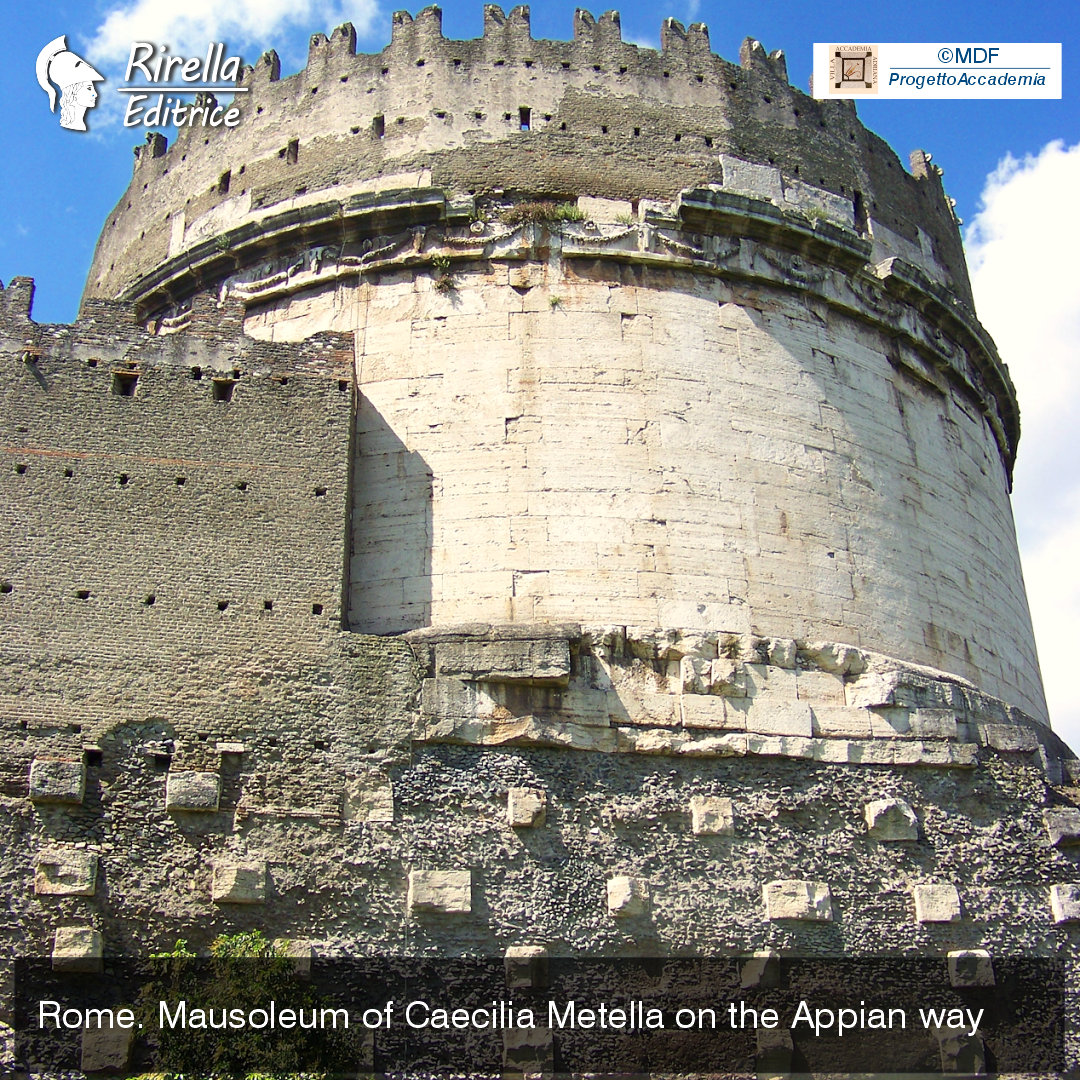
Among the best-known examples are the Mausoleum of Caecilia Metella in Rome on the Appian Way and the Mausoleum of the Plautii in Tivoli, on the via Tiburtina near Ponte Lucano. Both were built in a strategic point of high traffic, with a circular tower-like building revetted in travertine, set on a square base.
Augustus built Rome's first great imperial Mausoleum, the grandiose tomb where all the emperors of the Julio Claudian and Flavian dynasties were buried, along with their relatives. The last emperor was Nerva. It also had a circular building on a square base.
Instead of a consular road, Augustus chose a place of great symbolic importance: the Campus Martius, where Romulus' apotheosis had taken place, and where he himself had built Agrippa's first Pantheon and the Ara Pacis, to celebrate the end of a century of civil wars.
As we explain in our book «Castel Sant'Angelo. Mausoleum of Hadrian. Architecture & Light» (English edition also) emperor Hadrian decided to build his new dynastic tomb while he was still alive, and took the Mausoleum of Augustus as his model. Space was limited in the Campus Martius, because during more than a century, many monuments and temples dedicated to various deified emperors had been built.
There was no room for another Mausoleum of that size, and Hadrian chose an area near the Campus Martius, where he could have all the space he needed: the Horti Domitiae, which had long belonged to the imperial house.
They were on the opposite bank of the Tiber, and thus it was necessary to build the Pons Aelius as a monumental and spectacular access point, a true masterpiece of ancient hydraulic science.
Before Augustus and Hadrian, there had been many illustrious precedents in the Hellenistic world, from which the Romans copied the symbols of power: imposing and spectacular architecture, magnificence, luxury, and art.
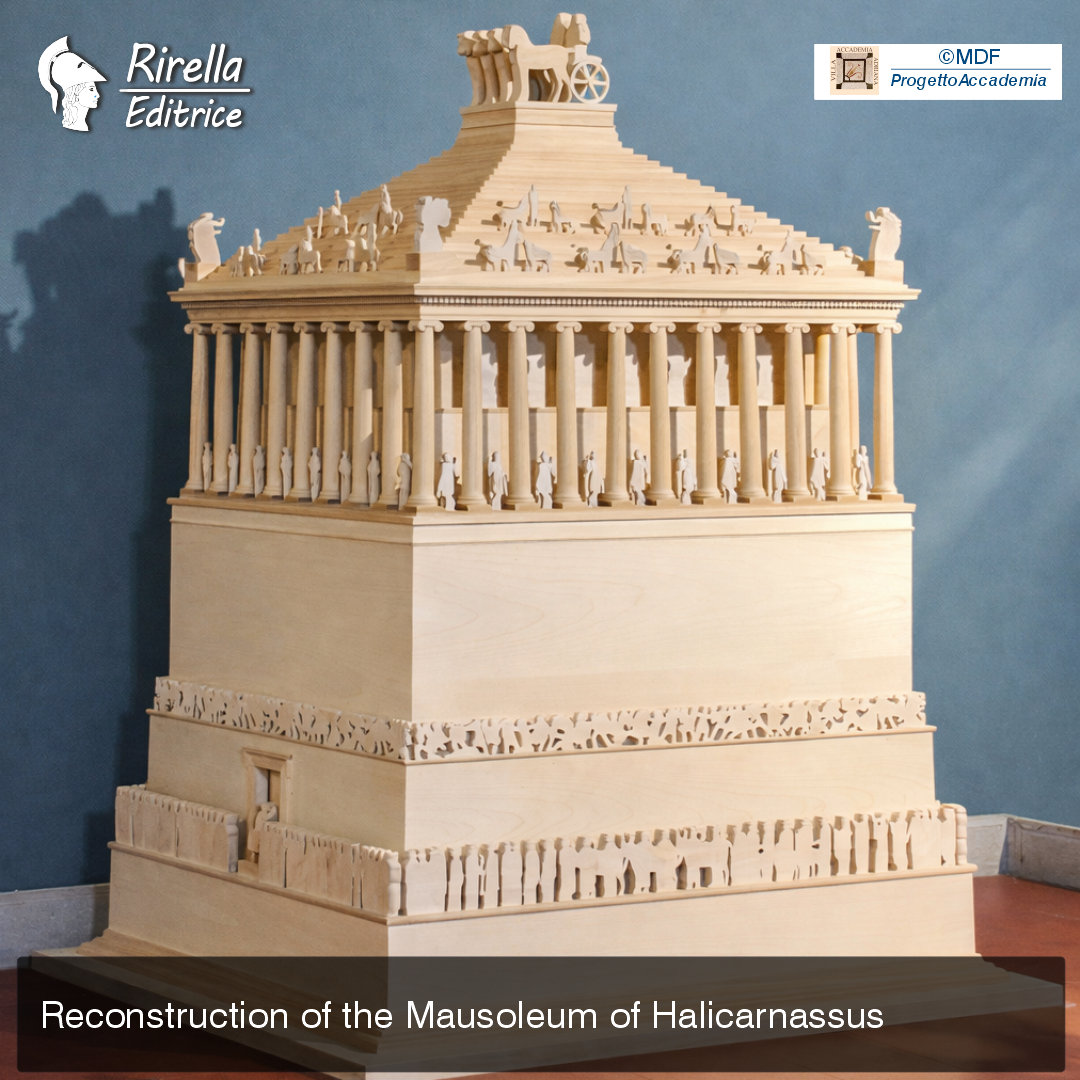
Particularly important is the Mausoleum of Halicarnassus, which was built in the 4th century BC. It was built by Artemisia in honor of her husband Mausolus, the king of Caria, and it is from his name that the term "Mausoleum" originated, synonymous of a monumental tomb.
It was decorated with sculptures and reliefs by the most famous artists of the time (Bryassides, Leochares, Timotheus, and Skopas). At the top stood a Quadriga of the Sun, perhaps driven by the couple. It was one of the Seven Wonders of the World, along with the Pyramid of Cheops, the only one that survived and certainly the most grandiose tomb of all time.
For centuries, Alexander the Great was a legend to be imitated by all the greatest leaders of the Roman world, who dreamed of repeating his exploits (imitatio Alexandri).
His Mausoleum (which has never been discovered) was visited by Julius Caesar, Augustus, Germanicus, and then by the emperors Caligula, Vespasian, Titus, Hadrian, Septimius Severus, and Caracalla.
What did these extraordinary funerary monuments have in common? They were a clear and concrete symbol of the power, wealth, and prestige of those who built them.
But they also had religious significance, as they were the site of ancestor worship. In the case of aristocratic families, the ancestors were influential figures or even heroes like Heracles, who brought prestige to the family and legitimized its power within the community.
In the case of the emperors and the Imperial House, things went much further. The Julio-Claudian dynasty claimed descent from Venus and Aeneas, and therefore had divine ancestors.
And then, after death, the deified emperor became the tutelary deity of the dynasty, of Rome, and of the empire. Hadrian, deified as Sol Invictus, was depicted as the Invincible Sun riding the Quadriga of the Sun atop his Mausoleum, conferring divine legitimacy on his successors.
We explain this in detail in our book «Castel Sant'Angelo. Mausoleum of Hadrian. Architecture & Light» which reveals the hidden symbolism of its architecture, linked to the Light of the Sun as a symbol of divinity and Power.