Thanks to the enormous spoils conquered during the wars, especially those in Judea, Vespasian decided to start major public works to leave a lasting legacy of his reign. In addition to restoring the temples of the Divus Claudius and of Jupiter Optimus Maximus, he designed a new Forum with the Templum Pacis and, above all, the grandiose Flavian Amphitheater, better known as the Colosseum, for which he is still remembered today.
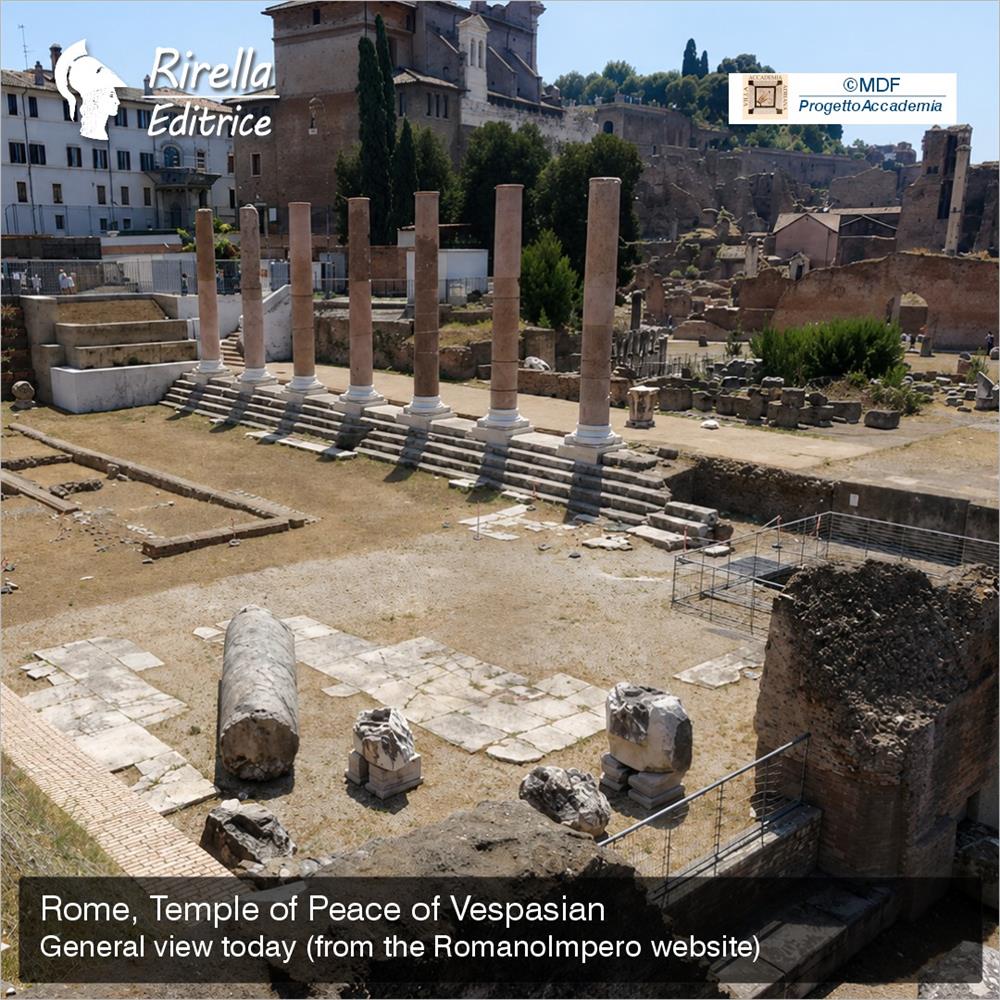 The Templum Pacis
Built between 71 and 75 AD, it was set inside the large porticoed courtyard of the Forum of Vespasian (also called Forum Pacis). It had a large central hall with an apse, in which the statue of the goddess of Peace stood. The Temple was dedicated to the goddess who had put an end to the turbulent period of civil wars for Nero's succession.
We have the description of Procopius of Caesarea, a Byzantine historian who lived between the 5th and 6th centuries AD. «The coffered vaults were gilded, and the floor was made of slabs of various precious marbles, as were some parts of the walls. The three vaults were covered with paving; above the two smaller ones, lunettes also illuminated the interior».
The large apsed hall was flanked by four large rooms intended for Libraries, in one of which the Forma Urbis was discovered, the large plan of ancient Rome commissioned by Septimius Severus between 203 and 211 AD. It was a version engraved on marble of the cadastral maps, an invaluable document for reconstructing the appearance of the ancient city and identify its monuments.
The first discoveries of the fragments date back to 1562, and in total, more than a thousand fragments are known, representing only a small percentage of the total. Others have been lost, but are known from drawings.
Archaeologist Rodolfo Lanciani was the first to use them for his reconstructions, and Stanford University in California (USA) recently launched a project to reassemble them using computer technology.
Very little remains of the Temple; after it was damaged by a fire, a large part of it was destroyed to make way for the Forum of Nerva and then the Basilica of Maxentius, which was built over a reused section of the portico. Another part was incorporated into the Church of Saints Cosmas and Damian, while the section facing the Velia and the Palatine was razed in 1932 to build the Via dei Fori Imperiali.
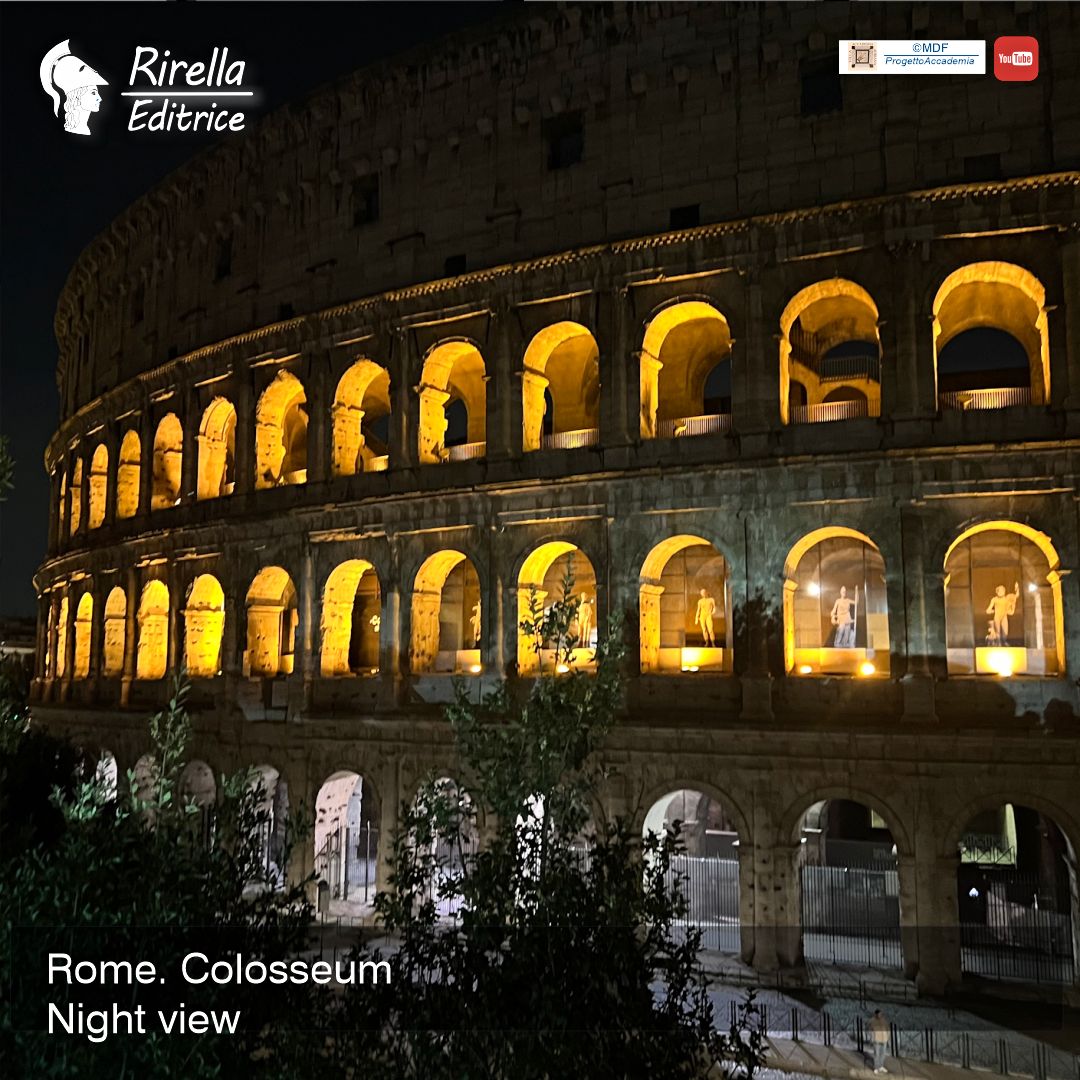 The Flavian Amphitheater or Colosseum
Its construction was naturally part of the «bread and circuses» policy, to win the favor of the people: no emperor before or after Vespasian designed and built anything as grandiose. It measures 76 x 46 meters, with the imperial box (pulvinar) on the south side, and others for the most important figures of the clergy and magistrates.
Vespasian built it on the site of the artificial lake that Nero had created for his Domus Aurea, and therefore it was necessary to provide it with sturdy foundations made of large blocks of tuff and travertine, still visible in the basement under the arena.
It could accommodate approximately fifty thousand people seated, with eighty thousand including standing room. Seating was divided according to the spectators' social rank. The best seats were below, directly in front of the arena, reserved for senators and important figures, and had marble seats. In front of them was a special fence that served to protect them from the wild beasts exhibited during the shows.
Then there were the stands, divided into three different sectors: the first (maenianum primum), reserved for the members of the equestrian order. The second was for the less wealthy classes (maenianum secundum). The third was on the top floor, essentially the gallery (summa cavea), reserved for the plebs and women, who sat on wooden benches or stood.
Begun by Vespasian in 75 AD, the Colosseum was inaugurated by his son Titus in 80 AD with all kinds of spectacles that lasted for several days: gladiatorial combats and venationes, during which, unfortunately, as many as five thousand exotic animals brought specifically from Africa were killed.
In 249 AD, Equally grandiose spectacles were organized and donated to the people by Emperor Philip the Arab to celebrate the millennium of the founding of the city of Rome.